

6 emotional interior design keys to create spaces that calm

Updated: Jul 28
A luxury residence can also function as a pause: welcoming you during a season of rest, opening space for connection, and helping you disconnect from the usual rhythm.
In Puerto Vallarta, where nature accompanies the experience of inhabiting, a vacation home can become an emotional refuge.
Emotional interior design begins with that idea. Materials, light, layout, and textures influence the way a home supports rest, conversation, and calm.
In this article, we bring together interior design keys for creating spaces that calm, with a perspective centered on second homes and the value of working with professional interior designers.

When a vacation home does not offer true breathing room
A vacation residence may have privileged views and a good selection of pieces, but still feel uncomfortable if the design does not respond to its real use.
In beach destinations, such as Punta Mita or Puerto Vallarta, many homes function as second residences: they welcome people by season, on weekends, or during family stays. That is why interior design should make arrival, rest, and connection easier.
Calm comes from precise decisions: clear circulation, materials suited to the climate, fresh textiles, warm light, shade, ventilation, and bedrooms designed to disconnect.
A professional firm turns that intention of rest into a functional, elegant home ready to be enjoyed.
Keys to creating a home that functions as a refuge
A residential refuge is born from a sum of decisions. Calm begins from the moment of arrival, accompanies the walkthrough, and allows each area to have a clear intention.
Below, we bring together 6 interior design keys that help build that experience in a vacation home.
1. Design soft transitions between activity and rest
A home that calms needs transitions. The passage from the exterior to the living room, from the social area to the bedrooms, or from the terrace to the interior should allow a gradual shift in energy.
Fluid circulation helps the residence breathe. Generous hallways, controlled views, clear access points, and pause areas prevent the home from feeling like a sequence of isolated spaces.
In a complete residence, this work allows social life to have presence without invading private areas. The result encourages a more orderly and serene experience.
2. Use light as an emotional tool
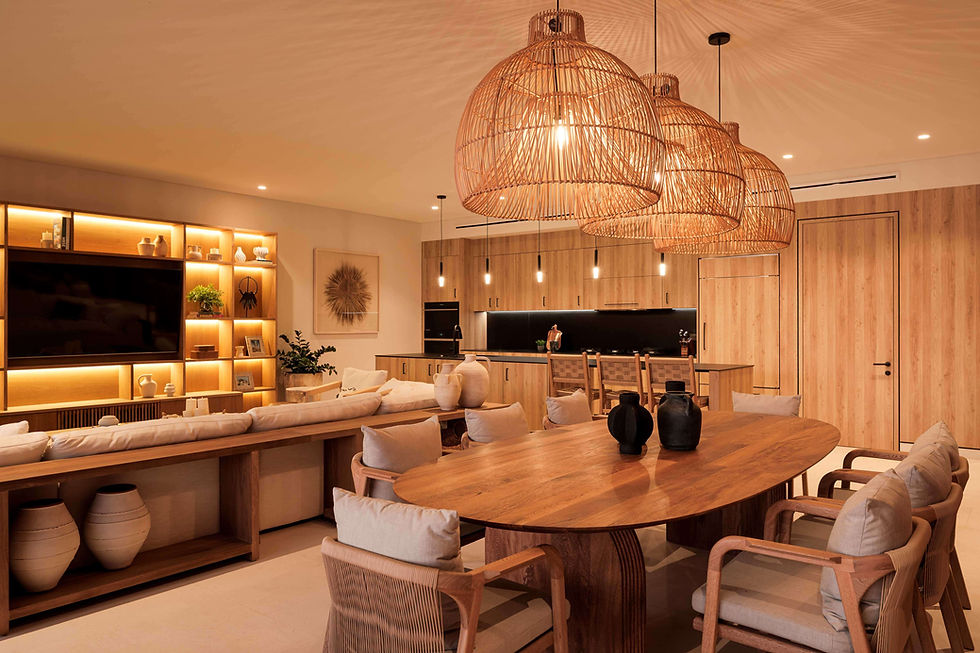
Warm lighting transforms the perception of a home. The same living room can feel distant with cold light or deeply welcoming with the right temperature, layers of light, and well-placed accent points.
Emotional interior design works with light according to moments: clarity for gathering, softness to close the day, emphasis for art or texture, and controlled dimness for rest.
In Puerto Vallarta, natural light also needs filtering. Light curtains, latticework, shade, and orientation help preserve freshness without weakening the relationship with the landscape.
3. Choose materials that transmit calm to the body
The body reads a home before the mind does. A surface that is too shiny, a rigid fabric, or a cold floor can alter the experience of the space.
That is why materials such as natural wood, plant fibers, stone with a soft finish, linen, cotton, and rugs with gentle texture bring tactile calm. The selection should consider beauty, maintenance, and response to climate.
In a luxury residence, the feeling of refuge appears when each material invites contact, ages with dignity, and preserves coherence with the surroundings.

4. Create a palette that lowers visual noise
A warm neutral palette allows the gaze to rest. Sand, bone, stone, soft clay, light wood, and natural accents help build an enveloping atmosphere.
This means reducing competition between elements. The home gains order when color, furniture, textiles, and art follow a common direction.
Color can also accompany moods. In social areas, warm tones encourage hospitality; in bedrooms, soft shades help prepare for rest.
5. Integrate nature without turning it into scenery
Biophilic connection brings the home closer to the landscape through greenery, natural light, views, organic materials, and textures inspired by nature.
In a beach house, this connection should feel natural. A well-integrated terrace, a framed view, or a plant placed with intention can bring greater calm than excessive decoration.
Nature works best when it participates in the daily experience: shade, ventilation, freshness, aromas, contemplation, and visual contact.
6. Leave space for what holds meaning
A refuge also needs identity. Art, inherited objects, artisanal pieces, or carefully chosen memories can bring emotional depth to a residence.
The key is to curate, select, and place. Each piece should have space to breathe and dialogue with the rest of the home.
A professional interior designer helps turn those personal references into an elegant composition. In this way, the home gains character without losing calm.
Emotional interior design trends for 2026
In 2026, luxury interior design favors spaces with greater sensory richness. The intention is to create environments that support everyday well-being through precise decisions around light, texture, color, and proportion.
Natural materials, textured surfaces, and ambient lighting bring depth without overwhelming.
Pause areas are also gaining value, designed for reading, contemplating, or sharing moments with greater calm.
In coastal destinations, this vision gains special strength. Ventilation, shade, natural fibers, and openness toward the landscape help build fresh, serene, and pleasant interiors throughout the day.
Emotional luxury appears when the home offers a harmonious and close experience. Sophistication emerges in the way spaces transmit comfort, clarity, and an authentic relationship with their surroundings.
Varea: a residence designed to inhabit calm
The interior design of Varea shows how a residence can transmit serenity without losing character. The scope of this project included interior design, furniture, and decoration.

Its contemporary boho language combines a neutral palette with wood, stone, natural fibers, soft textiles, and warm lighting.
The composition maintains a fluid relationship with the surroundings and turns the everyday experience into an expression of comfort, elegance, and closeness.
Varea offers a valuable reference for coastal residences where light, landscape, and rest are an essential part of the way of inhabiting.
Interior designer services in Puerto Vallarta
Designing a residence in Puerto Vallarta requires aesthetic sensitivity, local knowledge, and technical criteria. Humidity, salinity, intense light, and logistics influence every project decision.
At Victoria Plasencia Interiorismo, we develop complete luxury residences. Our team accompanies concept, layout, materials, furniture, decoration, coordination, and final delivery.
We work in Puerto Vallarta, Punta Mita, Bucerías, and Higuera Blanca with a contemporary, warm aesthetic connected to the surroundings. Our method turns an emotional intention into clear, executable, and coherent decisions.
When design has direction, the home gains beauty, functionality, and calm.
Let’s design a residence that invites rest
At Victoria Plasencia Interiorismo, we develop turnkey projects with an integral, close, and carefully guided perspective.
If you are about to design a complete residence in Puerto Vallarta, schedule a private consultation with our team and let’s talk about the atmosphere you want to build.
Frequently asked questions about emotional interior design
What is emotional interior design?
Emotional interior design is a way of designing that considers how the home influences well-being, rest, connection, and calm. It works with light, color, layout, textures, materials, and personal objects to create a more conscious experience.
What does a professional interior designer bring to emotional design?
A professional interior designer turns sensations into concrete solutions. They listen to references, interpret habits, evaluate climate and architecture, select suitable materials, and coordinate every decision so the home functions as a complete refuge.




Comments