

How residential interior design can elevate human well-being
- Victoria Plasencia

- 5 days ago
- 7 min read
Designing a complete residence involves making decisions that will accompany daily life for years.
As interior designers in the luxury sector, we know that interior design can elevate human well-being when it improves rest, facilitates connection, and organizes the everyday experience.
The composition of a residence influences the body, the mind, relationships, the senses, and the way people relate to the environment they inhabit. Every decision — light, scale, texture, circulation, or furniture — leaves a mark on the way the space is inhabited.
In this article, we explain how a residence can function as a well-being system. This perspective allows us to understand an interior design project with greater precision: its aesthetic presence, its functional coherence, and the value it brings to those who inhabit it.

Residential well-being as a complete design system
The World Health Organization, in its housing and health guidelines, relates home conditions to health and quality of life. This document addresses topics such as indoor temperature, noise, accessibility, air, water, and physical risks.
Although the guide speaks about healthy housing in a broad sense, its reading is valuable for residential interior design because it helps us remember that a home impacts everyday experience through material, environmental, and functional elements.
In the development of a luxury residence, every layer of the project should work in favor of a clearer, more enjoyable, and longer-lasting life.
That is why an integral design firm observes the home as a living whole: it analyzes the relationship between social areas, private spaces, circulation, light, materials, and daily operation so that each decision brings coherence to the entire home.
In a high-end residential project, design requires aesthetic sensitivity, a reading of lifestyle, technical criteria, and organized guidance. This combination makes it possible to create homes that are coherent, livable, and functional in the long term.
6 dimensions of interior design for human well-being
When a complete home begins a design process, it is useful to observe well-being from several dimensions. This structure prevents the topic from being reduced to decoration, color, or trends, and allows us to understand the value of an integral vision.
Below, we explore six dimensions that make it possible to read a residence through the complete experience of those who inhabit it: body, mind, relationships, senses, daily operation, and emotional connection.
Physical well-being: the body as a starting point
Physical well-being pays attention to rest, posture, temperature, light, ventilation, and ease of use. A residence should naturally support the body, from the height of a bed to the depth of an armchair.
Residential ergonomics makes it possible to define appropriate proportions for sitting, moving, sleeping, talking, and working. The body perceives these decisions immediately, even if it rarely turns them into words.
Circadian lighting, controlled natural light, and cross ventilation also play a role when the architecture allows them to be used. In warm climates, these strategies bring freshness, clarity, and comfort.
Mental well-being: order, clarity, and less friction
Mental well-being inside the home appears when routine flows with less effort. A well-organized residence reduces unnecessary decision-making and allows every activity to have a clear place.
Functional layout plays a central role. Kitchen, dining room, living room, bedrooms, terraces, bathrooms, walk-in closets, and service areas need a logical relationship so that daily life can move forward fluidly.
Visual order also matters. When there is enough storage, clear surfaces, consciously resolved lighting, and a coherent color palette, the spaces in a home reduce perceptual saturation.
In a residence, the mind appreciates when interior design anticipates needs and lightens the burden of stress.

Relational well-being: connection and privacy
A residence accompanies different forms of relationship. There are long meals, visits, conversations, celebrations, and individual pauses. Interior design should allow that variety with balance and flexibility.
Social areas require proportion, circulation, and furniture that invites people to stay. A living room with well-oriented seating encourages conversation, while an integrated terrace extends connection toward the outdoors.
At the same time, those who inhabit a home need spaces where they can withdraw, rest, or concentrate with calm. Privacy is also part of well-being because it balances social life with moments of personal pause.
Interior acoustics helps build that sense of refuge. Textiles, rugs, curtains, bookshelves, and absorbent materials soften noise, protect rest, and give greater intimacy to the rooms. Relational well-being lives precisely in that balance: openness for connection and intimacy for living calmly.
Sensory well-being: touch, color, light, and atmosphere
Sensory well-being integrates what the body perceives before explaining it: the texture of a fabric, the temperature of a stone, the softness of a rug, the tone of the light, or the depth of a shadow.
Natural materiality brings tactile and visual richness. Stone, wood, fibers, linen, clay, palm, or marble create interiors with lasting presence and a close relationship with the environment.
Organic textures add depth without saturating the composition. A residence can feel warm and sophisticated with few elements when each surface fulfills a function within the whole.
Color psychology also participates in this dimension. In a publication about color and design, our firm shared insights on how tones dialogue with culture, memory, identity, and perception.
Operational well-being: maintenance, climate, and durability
Well-being also depends on what makes life easier after delivery. Resistant materials, appropriate furniture, correct fabrics, and precise logistics protect the investment and reduce future adjustments.
In coastal destinations, such as Los Cabos, this dimension is essential. Humidity, sun, dust, salinity, wind, and constant use demand specific decisions from the beginning.
Material selection should consider maintenance, texture, durability, and response to climate. A residence facing the landscape needs beauty, resistance, and a clear reading of daily use.
Emotional well-being: belonging, memory, and meaning
Emotional well-being appears when a residence conveys belonging. Design integrates personal history, art, meaningful objects, cultural references, landscape, and an atmosphere coherent with those who inhabit it.
Biophilic design supports this dimension by connecting the interior with nature, views, vegetation, ventilation, and organic materials. In a vacation home, the exterior can become an emotional axis.
Identity also comes into play. A complete residence should feel personal, with a singular narrative and a deep relationship with place. Authentic luxury lives in that correspondence.
From our perspective, the home should accompany daily life while also building memory. That depth emerges when aesthetics, use, and personal meaning move forward in the same direction.
Interior design trends for 2026 and human well-being
The 2026 Trends Outlook report, published by the American Society of Interior Designers, identifies well-being, flexibility, sustainability, and lifestyle changes as relevant factors for the built environment.
This reflects an important shift: contemporary homes require both a carefully crafted image and a precise response to rest, connection, privacy, efficiency, and permanence.
We are also observing greater interest in natural materials, warm palettes, art, artisanal pieces, adaptable lighting, and a fluid relationship with terraces, gardens, or views. Innovation adds value when it simplifies life.
For a complete residence, the most relevant trend consists of uniting lasting beauty, clear operation, and realistic well-being. The result should feel current, comfortable, and deeply livable even over time.
Lagos home: luxury interior design connected with the landscape
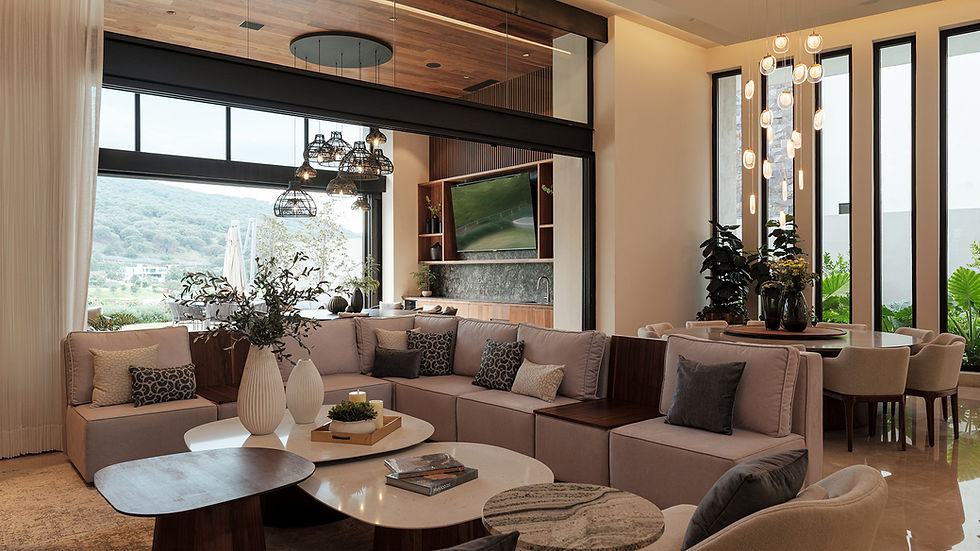
Lagos home allows us to understand how residential well-being can be expressed through the bond with the environment. The scope of this project includes interior design, furniture, and decoration.

The residence functions as a restful refuge with broad views and a connection with nature. Its contemporary boho style combines the rustic and the modern within a serene atmosphere.
Casa Lagos shows how a clear direction can translate into sensory richness through soft fabrics, stone surfaces, wood, and chromatic accents. Calm and vitality coexist with the landscape.
This luxury interior design project exemplifies the residence as a well-being system. Rest, texture, light, environment, and piece selection dialogue to create a home designed to be lived in with pause, freshness, and connection to Los Cabos.
Luxury interior designer services in Los Cabos
Lagos home shows how well-being grows from a connection with the surroundings. Hiring an interior designer in Los Cabos brings that vision into every stage of the project.
A coastal residence requires beauty, resistance, and expert coordination. That is why an integral project should include concept, layout, materials, furniture, lighting, art, purchases, logistics, installation, and delivery.
For those seeking interior designers specialized in complete residences, the difference lies in having a firm that integrates creative sensitivity and method.
In interior design projects in Los Cabos, this structure helps protect the investment, care for timelines, and choose solutions suited to life by the sea.
Our turnkey service accompanies every stage so the client can participate in essential decisions while the team leads the complete operation.
Let’s design a residence that elevates your daily well-being
Your residence can become an environment where every decision brings calm, order, and everyday beauty.
In a private consultation, our team reviews location, scope, lifestyle, timelines, and priorities to define the path toward an integral turnkey project.
Schedule your call with Victoria Plasencia Interiorismo and let’s begin shaping a home designed to support your daily well-being.
Frequently asked questions about interior design and human well-being
What does interior design oriented toward human well-being mean?
It means designing interiors that support the body, mind, relationships, senses, daily operation, and emotional connection. This approach considers light, layout, materials, acoustics, ergonomics, color, nature, and maintenance.
What is the difference between decoration and interior well-being?
Decoration works with style, pieces, and ambiance. Interior well-being adds functional, sensory, and technical criteria. It analyzes how the environment influences the body, mind, routines, and the way we inhabit.
Why hire an integral firm for a residence in Los Cabos?
An integral firm coordinates design, materials, suppliers, logistics, furniture, and installation. In Los Cabos, this coordination is key because of the climate, sun exposure, supply timelines, and constant relationship between interior and exterior.



Comments