

Storage design to better organize your home and your days

Disorder is not always about a lack of discipline. Often, it is the result of an unresolved interior design issue.
When objects don’t have a defined place, when accessing them requires effort, or when the space does not support your routine, order becomes temporary. It doesn’t last and demands too much effort.
This is where storage design, approached from interior design, becomes essential. A well-thought-out system reduces decision-making, prevents accumulation, and simplifies your daily life.
You don’t need to constantly organize because the space is already designed to work with you.
In this article, we show you how to achieve this through residential interior design, from the logic behind storage to practical solutions you can apply throughout your home.

When your home is not designed for your lifestyle
There is a common feeling in many homes: everything seems in place, yet nothing flows.
You waste time looking for things, repeat small tasks, or constantly reorganize. Many organizational systems fail because they are based on objects rather than people’s routines. This forces you to move more, think more, and rely on constant effort.
Storage type also plays a role. Unplanned furniture, improvised solutions, or underutilized spaces create visual clutter and make it harder to maintain order.
When storage is not integrated into the design, the result is usually temporary.
A proper approach changes this logic: the space adapts to you, not the other way around.
How to design storage that works in your daily life
An efficient system doesn’t depend on having more space, but on using it better.
Before diving into each point, keep this in mind: sustainable order comes from ease, not effort.
1. Design based on your daily routine
Observe how you use your home:
What do you use every day?
Where do you need it?
When do you look for it?
Storage should respond to these questions. Frequently used items should be accessible. Occasional items can be placed in secondary areas.
2. Assign a clear place to every object
Each item needs a defined location. Without this clarity, clutter returns.
Create a simple and logical system. The goal is to store things without overthinking.
3. Integrate storage into the interior design
Storage should be part of the space from the beginning.
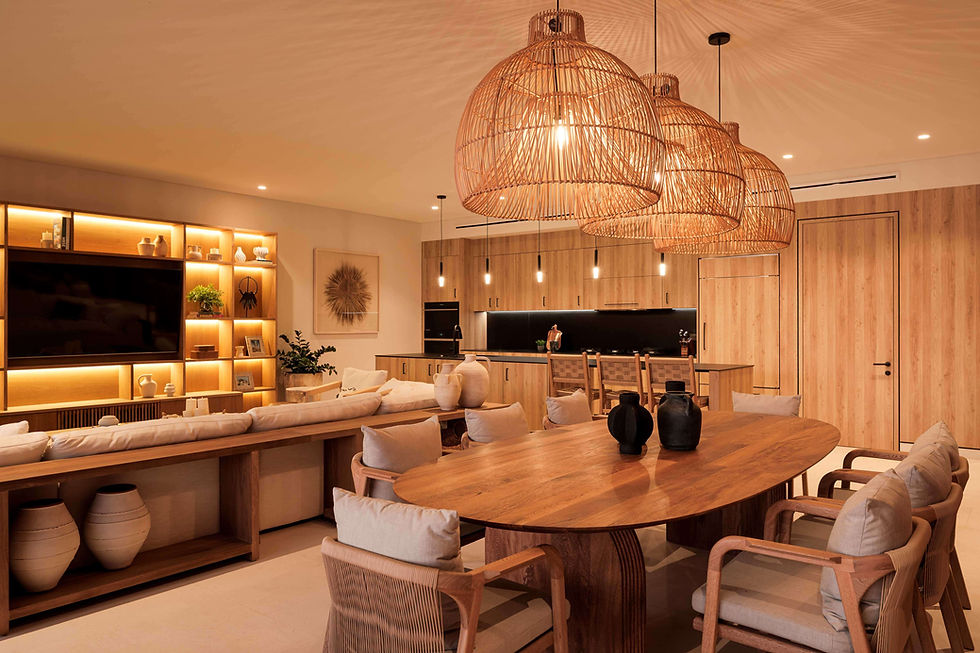
Built-in solutions, custom furniture, and material continuity allow order to coexist with aesthetics.
This creates visually cleaner and easier-to-maintain environments.
4. Use vertical space
Walls are a valuable and often underused resource.
Tall shelving, vertical modules, or floor-to-ceiling storage free up surfaces and expand capacity without overcrowding the space.

5. Incorporate multifunctional furniture
Some elements can serve more than one purpose:
Benches with internal storage
Beds with drawers
Tables with compartments
Custom bookshelves
These solutions optimize space without adding unnecessary visual volume.
6. Organize by activity zones
Grouping objects by use simplifies your routine. For example:
Coffee station in the kitchen
Work area in a study
Personal care space in the bedroom
This reduces movement and improves daily efficiency.
7. Prioritize closed storage
Hiding certain items reduces visual noise. Cabinets, drawers, and doors help maintain a clean look without requiring constant perfection.
This type of storage also creates a sense of control and clarity.
2026 trends in storage design
Storage design is evolving toward more integrated and discreet solutions.
By 2026, there is a strong preference for hidden systems that maintain visual continuity. Clean lines and built-in furniture allow storage to blend into the space.
There is also growing demand for custom-designed furniture tailored to the specific needs of each household, avoiding generic solutions.
Functionality and aesthetics work together. Materials, proportions, and finishes form part of the same language.
The goal is clear: spaces that function naturally, without constant effort.
Inspiration from Creekside: storage that supports the kitchen
In the Creekside kitchen in Houston, storage plays a central role in the design.

Every element follows a functional logic. Areas are defined based on activities, making preparation and organization easier.
Cabinetry creates visual continuity while concealing utensils and keeping surfaces clear.
The layout enables quick access to essentials, reducing unnecessary movement.
This project shows how interior design applied to storage can transform daily life, making everything flow more smoothly.
Interior designer and decorator to optimize your space in Houston
A well-resolved storage system does not happen by chance. It requires analysis, planning, and a comprehensive vision of the space.
In our interior design studio, we work with you to understand how you live in your home. From there, we develop designs that simplify your routine and improve functionality.
Each project seeks a balance between aesthetics and real use. The result: clear, efficient spaces designed to last and improve your quality of life.
A home that flows with you
When storage is well designed, your home stops demanding effort. Everything finds its place, and your routine becomes lighter.
If you want to transform your space into a functional and organized environment, schedule a call with us. At Victoria Plasencia Interiorismo, we can help you design solutions that transform your life.
Frequently asked questions about storage design
How to design a storage space for the kitchen?
Define zones based on intended use: preparation, cooking, and storage. Keep frequently used items accessible and occasional ones in less accessible areas. Use closed cabinets and organize by functional categories.
What should be considered when designing a storage system at home?
Daily routine, frequency of use, accessibility, and ease of maintenance. An effective system allows organization without constant effort.
How to organize your home and make the most of every space?
Use vertical space, integrate storage into the design, and incorporate multifunctional furniture. Assign a clear place to each object and avoid complex systems.
What are the three types of storage?
Open, closed, and hidden storage. Each serves a different function depending on accessibility and visual intention.


Comments